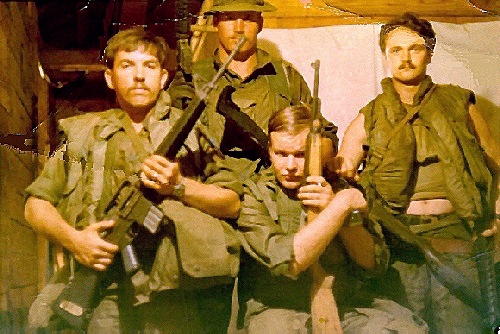
Spur pilots preparing for ground attack at Quan Loi

Courtesy of Tom Runkle
Audio: Bad Company
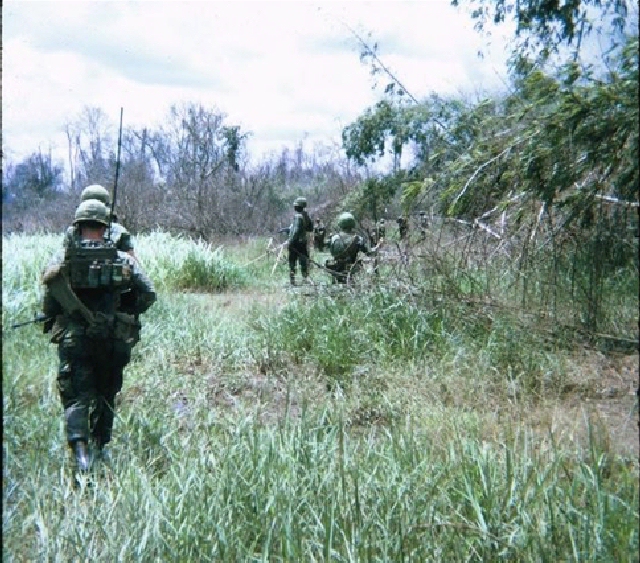
Spur ARPs, courtesy of Buzz Dennison
Spur pilots preparing for ground attack at Quan Loi
Courtesy of Tom Runkle
Spur ARPs, courtesy of Buzz Dennison
This stirring song was written by Justin Unger, and is the closing song in the movie, Last Ounce Of Courage.
Merry Christmas to all my fellow Spurs who served our country well when called. May God bless you and your families. – Bear & Pam Young
httpvh://youtu.be/QklqKkegbfA
httpvh://youtu.be/A5iue0Wi3gY
httpvh://youtu.be/DPlxKscaJWc

“Freedom is never more than one generation away from extinction. We didn’t pass it to our children in the bloodstream. It must be fought for, protected, and handed on for them to do the same, or one day we will spend our sunset years telling our children and our children’s children what it was once like in the United States where men were free.”
Ronald Reagan – 40th president of US (1911 – 2004)
As I was lying in bed pondering the problems of the world, I rapidly realized that I don’t really give a rat’s hiney. It’s the tortoise life for me!
1. If walking is good for your health, the postman would be immortal.
2. A whale swims all day, only eats fish, drinks water, and is fat.
3. A rabbit runs and hops and only lives 15 years.
4. A tortoise doesn’t run and does nothing, yet it lives for 450 years. And you tell me to exercise?? I don’t think so.
I’m retired. Go around me. God grant me the senility to forget the people I never liked, the good fortune to run into the ones I do, and the eyesight to tell the difference.
Now that I’m older here’s what I’ve discovered:
1. I started out with nothing, and I still have most of it.
2. My wild oats have turned into prunes and all-bran.
3. I finally got my head together, and now my body is falling apart.
4. Funny, I don’t remember being absent-minded.
5. Funny, I don’t remember being absent-minded.
6. If all is not lost, where is it?
7. It is easier to get older than it is to get wiser.
8. Some days, you’re the dog; some days you’re the hydrant.
9. I wish the buck stopped here; I sure could use a few.
10. Kids in the back seat cause accidents.
11. Accidents in the back seat cause kids.
12. It’s hard to make a comeback when you haven’t been anywhere.
13. The only time the world beats a path to your door is when you’re in the bathroom.
14. If God wanted me to touch my toes, he’d have put them on my knees.
15. When I’m finally holding all the cards, why does everyone want to play chess?
16. It’s not hard to meet expenses . . . they’re everywhere.
17. The only difference between a rut and a grave is the depth.
18. These days, I spend a lot of time thinking about the hereafter . . . I go somewhere to get something, and then wonder what I’m hereafter
19. Funny, I don’t remember being absent-minded.
20. DID I SEND THESE TO YOU BEFORE……….??????
A good friend sent me this YouTube video link I believe many will enjoy & appreciate. I know I agree! – Bear
httpvh://youtu.be/ln01p1M2cH0
Submitted by Allan LaGrange, Spur Rifle Squad Leader:
Given to the Corps of Cadets at West Point
May 12, 1962
General Westmoreland, General Groves, distinguished guests, and gentlemen of the Corps. As I was leaving the hotel this morning, a doorman asked me, “Where are you bound for, General?” and when I replied, “West Point,” he remarked, “Beautiful place, have you ever been there before?”
No human being could fail to be deeply moved by such a tribute as this, coming from a profession I have served so long and a people I have loved so well. It fills me with an emotion I cannot express. But this award is not intended primarily for a personality, but to symbolize a great moral code – the code of conduct and chivalry of those who guard this beloved land of culture and ancient descent. That is the meaning of this medallion. For all eyes and for all time, it is an expression of the ethics of the American soldier. That I should be integrated in this way with so noble an ideal arouses a sense of pride and yet of humility which will be with me always.
Duty, Honor, Country: Those three hallowed words reverently dictate what you ought to be, what you can be, what you will be. They are your rallying points: to build courage when courage seems to fail; to regain faith when there seems to be little cause for faith; to create hope when hope becomes forlorn. Unhappily, I possess neither that eloquence of diction, that poetry of imagination, nor that brilliance of metaphor to tell you all that they mean.
The unbelievers will say they are but words, but a slogan, but a flamboyant phrase. Every pedant, every demagogue, every cynic, every hypocrite, every troublemaker, and, I am sorry to say, some others of an entirely different character, will try to downgrade them even to the extent of mockery and ridicule.
But these are some of the things they do. They build your basic character. They mold you for your future roles as the custodians of the nation’s defense. They make you strong enough to know when you are weak, and brave enough to face yourself when you are afraid.
They teach you to be proud and unbending in honest failure, but humble and gentle in success; not to substitute words for action; not to seek the path of comfort, but to face the stress and spur of difficulty and challenge; to learn to stand up in the storm, but to have compassion on those who fall; to master yourself before you seek to master others; to have a heart that is clean, a goal that is high; to learn to laugh, yet never forget how to weep; to reach into the future, yet never neglect the past; to be serious, yet never take yourself too seriously; to be modest so that you will remember the simplicity of true greatness; the open mind of true wisdom, the meekness of true strength.
They give you a temperate will, a quality of imagination, a vigor of the emotions, a freshness of the deep springs of life, a temperamental predominance of courage over timidity, an appetite for adventure over love of ease. They create in your heart the sense of wonder, the unfailing hope of what next, and the joy and inspiration of life. They teach you in this way to be an officer and a gentleman.
And what sort of soldiers are those you are to lead? Are they reliable? Are they brave? Are they capable of victory?
Their story is known to all of you. It is the story of the American man at arms. My estimate of him was formed on the battlefields many, many years ago, and has never changed. I regarded him then, as I regard him now, as one of the world’s noblest figures; not only as one of the finest military characters, but also as one of the most stainless.
His name and fame are the birthright of every American citizen. In his youth and strength, his love and loyalty, he gave all that mortality can give. He needs no eulogy from me, or from any other man. He has written his own history and written it in red on his enemy’s breast.
But when I think of his patience under adversity, of his courage under fire, and of his modesty in victory, I am filled with an emotion of admiration I cannot put into words. He belongs to history as furnishing one of the greatest examples of successful patriotism. He belongs to posterity as the instructor of future generations in the principles of liberty and freedom. He belongs to the present, to us, by his virtues and by his achievements.
In twenty campaigns, on a hundred battlefields, around a thousand campfires, I have witnessed that enduring fortitude, that patriotic self-abnegation, and that invincible determination which have carved his statue in the hearts of his people.
From one end of the world to the other, he has drained deep the chalice of courage. As I listened to those songs of the glee club, in memory’s eye I could see those staggering columns of the First World War, bending under soggy packs on many a weary march, from dripping dusk to drizzling dawn, slogging ankle deep through mire of shell-pocked roads; to form grimly for the attack, blue-lipped, covered with sludge and mud, chilled by the wind and rain, driving home to their objective, and for many, to the judgment seat of God.
I do not know the dignity of their birth, but I do know the glory of their death. They died unquestioning, uncomplaining, with faith in their hearts, and on their lips the hope that we would go on to victory. Always for them: Duty, Honor, Country. Always their blood, and sweat, and tears, as they saw the way and the light.
And twenty years after, on the other side of the globe, against the filth of dirty foxholes, the stench of ghostly trenches, the slime of dripping dugouts, those boiling suns of the relentless heat, those torrential rains of devastating storms, the loneliness and utter desolation of jungle trails, the bitterness of long separation of those they loved and cherished, the deadly pestilence of tropic disease, the horror of stricken areas of war.
Their resolute and determined defense, their swift and sure attack, their indomitable purpose, their complete and decisive victory – always victory, always through the bloody haze of their last reverberating shot, the vision of gaunt, ghastly men, reverently following your password of Duty, Honor, Country.
The code which those words perpetuate embraces the highest moral laws and will stand the test of any ethics or philosophies ever promulgated for the uplift of mankind. Its requirements are for the things that are right, and its restraints are from the things that are wrong. The soldier, above all other men, is required to practice the greatest act of religious training – sacrifice. In battle and in the face of danger and death, he discloses those divine attributes which his Maker gave when he created man in his own image. No physical courage and no brute instinct can take the place of the Divine help which alone can sustain him. However horrible the incidents of war may be, the soldier who is called upon to offer and to give his life for his country, is the noblest development of mankind.
You now face a new world, a world of change. The thrust into outer space of the satellite, spheres and missiles marked the beginning of another epoch in the long story of mankind – the chapter of the space age. In the five or more billions of years the scientists tell us it has taken to form the earth, in the three or more billion years of development of the human race, there has never been a greater, a more abrupt or staggering evolution. We deal now not with things of this world alone, but with the illimitable distances and as yet unfathomed mysteries of the universe. We are reaching out for a new and boundless frontier. We speak in strange terms: of harnessing the cosmic energy; of making winds and tides work for us; of creating unheard synthetic materials to supplement or even replace our old standard basics; of purifying sea water for our drink; of mining ocean floors for new fields of wealth and food; of disease preventatives to expand life into the hundred of years; of controlling the weather for a more equitable distribution of heat and cold, of rain and shine; of space ships to the moon; of the primary target in war, no longer limited to the armed forces of an enemy, but instead to include his civil populations; of ultimate conflict between a united human race and the sinister forces of some other planetary galaxy; of such dreams and fantasies as to make life the most exciting of all time.
And through all this welter of change and development your mission remains fixed, determined, inviolable. It is to win our wars. Everything else in your professional career is but corollary to this vital dedication. All other public purpose, all other public projects, all other public needs, great or small, will find others for their accomplishments; but you are the ones who are trained to fight.
Yours is the profession of arms, the will to win, the sure knowledge that in war there is no substitute for victory, that if you lose, the Nation will be destroyed, that the very obsession of your public service must be Duty, Honor, Country.
Others will debate the controversial issues, national and international, which divide men’s minds. But serene, calm, aloof, you stand as the Nation’s war guardians, as its lifeguards from the raging tides of international conflict, as its gladiators in the arena of battle. For a century and a half you have defended, guarded and protected its hallowed traditions of liberty and freedom, of right and justice.
Let civilian voices argue the merits or demerits of our processes of government. Whether our strength is being sapped by deficit financing indulged in too long, by federal paternalism grown too mighty, by power groups grown too arrogant, by politics grown too corrupt, by crime grown too rampant, by morals grown too low, by taxes grown too high, by extremists grown too violent; whether our personal liberties are as firm and complete as they should be.
These great national problems are not for your professional participation or military solution. Your guidepost stands out like a tenfold beacon in the night: Duty, Honor, Country.
You are the leaven which binds together the entire fabric of our national system of defense. From your ranks come the great captains who hold the Nation’s destiny in their hands the moment the war tocsin sounds.
The long gray line has never failed us. Were you to do so, a million ghosts in olive drab, in brown khaki, in blue and gray, would rise from their white crosses, thundering those magic words: Duty, Honor, Country.
This does not mean that you are warmongers. On the contrary, the soldier above all other people prays for peace, for he must suffer and bear the deepest wounds and scars of war. But always in our ears ring the ominous words of Plato, that wisest of all philosophers: “Only the dead have seen the end of war.”
The shadows are lengthening for me. The twilight is here. My days of old have vanished – tone and tints. They have gone glimmering through the dreams of things that were. Their memory is one of wondrous beauty, watered by tears and coaxed and caressed by the smiles of yesterday. I listen then, but with thirsty ear, for the witching melody of faint bugles blowing reveille, of far drums beating the long roll.
In my dreams I hear again the crash of guns, the rattle of musketry, the strange, mournful mutter of the battlefield. But in the evening of my memory I come back to West Point. Always there echoes and re-echoes: Duty, Honor, Country.
Today marks my final roll call with you. But I want you to know that when I cross the river, my last conscious thoughts will be of the Corps, and the Corps, and the Corps.
I bid you farewell.

Plumley, veteran of 3 wars, dies at age 92 – ArmyTimes – 10 Oct 12
Opinion: Why CSM Basil L. Plumley meant so much to me and so many others by Kerry Patton – 13 Oct 12
A Final Salute by Bridgett Siter – 18 Oct 12

httpvh://youtu.be/kT8gbXAF5EY
This in from one of our fellow Spurs, an important read in my opinion – Bear
1. He is addicted to war, although he loves you. War is horrible, but there is nothing like a life-and-death fight to make you feel truly alive. The adrenaline rush is tremendous, and can never be replaced. Succeeding in combat defines a warrior, places him in a brotherhood where he is always welcome and understood. The civilian world has adrenaline junkies as well; just ask any retired firefighter, police officer, or emergency room staff if they miss it.
2. Living for you is harder. It would be easy for him to die for you because he loves you. Living for you, which is what you actually want, is harder for him. It is even harder for him if you are smart and do not need him to rescue you, since rescuing is something he does really well. If you are very competent at many things, he may at times question if you need him at all. He may not see that you stay with him as a conscious choice.
3. “The training kicks in” means something very different to him. It is direct battle doctrine that when ambushed by a superior force, the correct response is “Apply maximum firepower and break contact.” A warrior has to be able to respond to threat with minimal time pondering choices. While this is life-saving in combat, it is not helpful in the much slower-paced civilian world. A better rule in the civilian world would be to give a reaction proportionate to the provocation. Small provocation, small response (but this would get you killed on the battlefield). When the training becomes second nature, a warrior might take any adrenaline rush as a cue to “apply maximum firepower.” This can become particularly unfortunate if someone starts to cry. Tears are unbearable to him; they create explosive emotions in him that can be difficult for him to control. Unfortunately, that can lead to a warrior responding to strong waves of guilt by applying more “maximum firepower” on friends, family, or unfortunately strangers.
4. He is afraid to get attached to anyone because he has learned that the people you love get killed, and he cannot face the pain again. He may make exception for his children (because they cannot divorce him), but that will be instinctual and he will probably not be able to explain his actions.
5. He knows the military exists for a reason. The sad fact is that a military exits ultimately to kill people and break things. This was true of our beloved “Greatest Generation” warriors of WWII, and it remains true to this day. Technically, your warrior may well be a killer, as are his friends. He may have a hard time seeing that this does not make him a murderer. Although they may look similar at first glance, he is a sheepdog protecting the herd, not a wolf trying to destroy it. The emotional side of killing in combat is complex. He may not know how to feel about what he’s seen or done, and he may not expect his feelings to change over time. Warriors can experience moments of profound guilt, shame, and self-hatred. He may have experienced a momentary elation at “Scoring one for the good guys”, then been horrified that he celebrated killing a human being. He may view himself as a monster for having those emotions, or for having gotten used to killing because it happened often.
6.He’s had to cultivate explosive anger in order to survive in combat. He may have grown up with explosive anger as well.
7. He may have only been nineteen when he first had to make a life and death decision for someone else. What kind of skills does a nineteen-year-old have to deal with that kind of responsibility?One of my veterans put it this way: “You want to know what frightening is? It’s a nineteen-year-old boy who’s had a sip of that power over life and death that war gives you. It’s a boy who, despite all the things he’s been taught, knows that he likes it. It’s a nineteen-year-old who’s just lost a friend, and is angry and scared, and determined that someone is gonna pay. To this day, the thought of that boy can wake me from a sound sleep and leave me staring at the ceiling.”
8. He may believe that he’s the only one who feels this way; eventually he may realize that at least other combat vets understand. On some level, he doesn’t want you to understand, because that would mean you had shared his most horrible experience, and he wants someone to remain innocent.
9. He doesn’t understand that you have a mama bear inside of you, that probably any of us could kill in defense of someone if we need to. Imagine your reaction if someone pointed a weapon at your child?
10. When you don’t understand, he needs you to give him the benefit of the doubt. He needs you also to realize that his issues really aren’t about you, although you may step in them sometimes. Truly, the last thing he wants is for you to become a casualty of his war.
Opinion piece submitted by Spur 38, Mike Billow:
Exploding the Myths About Vietnam By LIEN-HANG NGUYEN
And another thought provoking article:
The Day It Became the Longest War by Lt. Gen. Charles Cooper, USMC (Ret.)
Proud American Veterans
In Honor of
Sgt. Gregory Antunano
KIA-BNR Cambodia, 24 July 1971

This Site Powered by: